BilagPilot in operation
From ongoing operations, September 2026.
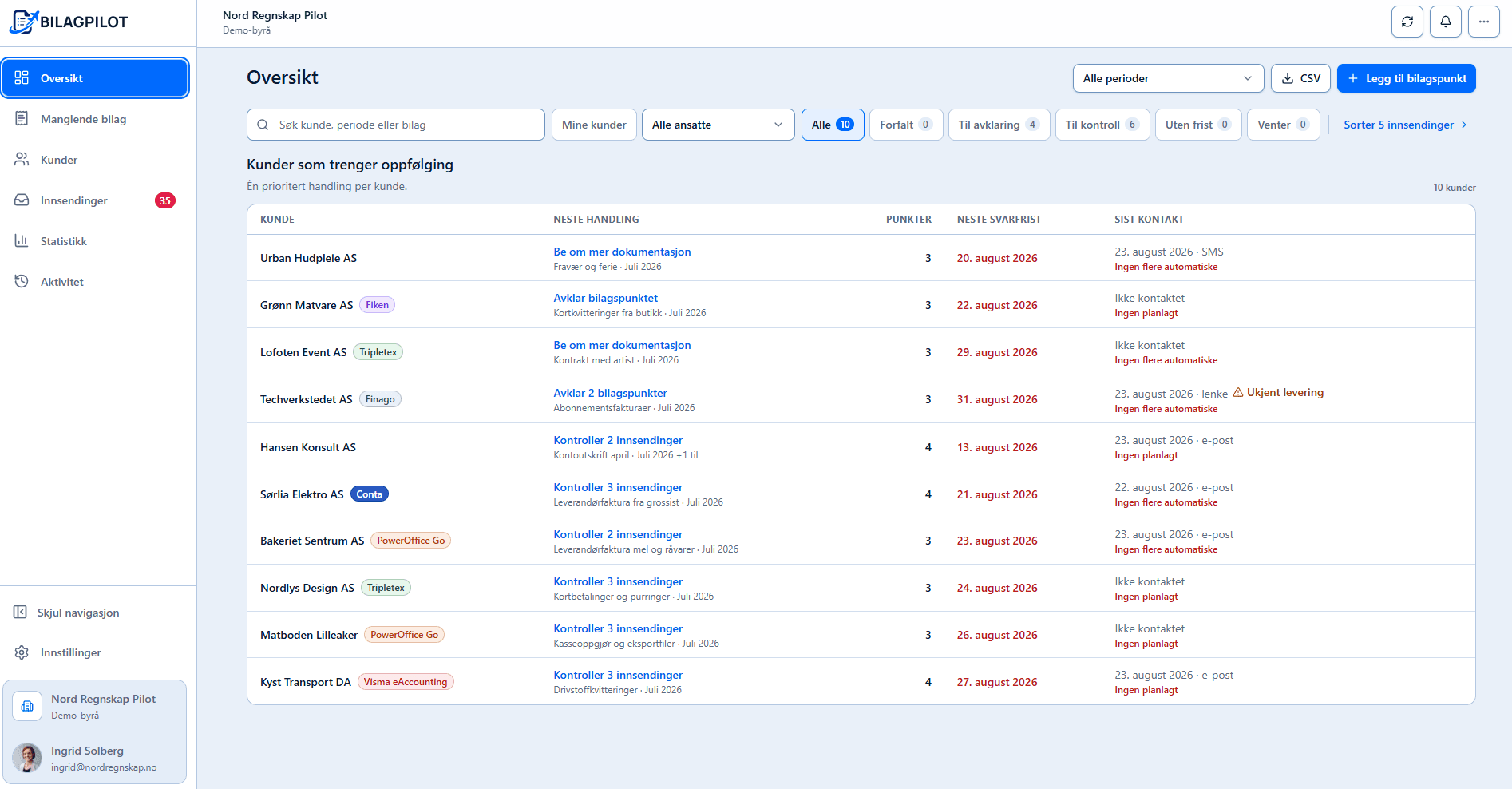
- 8,000+entries without supporting documents found

Bob retrieves and checks attachments. You agree on what runs automatically and what a responsible person must approve.
Example: checking submitted attachments.
Access is limited to what the specific task needs and documented before starting. Runs, stops and approvals are logged. A named person remains responsible for anything requiring judgement.

The volume or value is too low, or the task requires judgement every time.
Clarify the main steps, data and responsibilities before you build.
When the rules can be described and someone takes responsibility for exceptions, the task can be tested on a small scale.

I developed BilagPilot, which finds entries without supporting documents and brings follow-up together. I also build and maintain your workflow.
From ongoing operations, September 2026.














If a pilot is the right next step, we agree on scope and timeline.
One task, clear boundaries and a measurable starting point.
The first version connects to agreed systems and data.
Real cases reveal exceptions, errors and adjustments needed.
You receive documentation and a basis for continuing or stopping.

What will be built, the fixed price and what is excluded. Scope and systems determine the price.
50% at the start and 50% on delivery. If I recommend stopping, the final half is not invoiced.
Hosting, monitoring, support and improvements are agreed and priced separately.
A twelve-month agreement with three months' notice on either side. You keep the solution and documentation.

Operations are optional and priced separately. A twelve-month agreement with three months' notice on either side. You keep the solution and documentation.
No. Bob is one clearly scoped workflow. Standard steps can be automated, while professional judgement, client responsibility and approval stay with the team.
No, not as a starting point. We map the systems the task already passes through and only build when there is a safe, practical way to access them.
Only what the scoped task needs. Access, actions, stopping points and logging are documented before starting.
The task is built with stopping points. Errors and exceptions do not proceed when an action requires judgement. A responsible person reviews the case, and the event is logged.
Then no is the right answer. Discovery may conclude with keeping the task manual, simplifying it first or exploring a limited pilot.
Yes, to decide whether the task is worth investigating further. Final pricing and results require the systems, data and exceptions to be scoped first.
Bring the task that keeps coming back. Twenty minutes is enough to find the next step.